 Own vehicle
Car sunset area
Cars only, no toilets
- Access
- Cars only
- Facilities
- None, no water
- Wheelchair
- Yes
Guides
Language
EnglishCurrency
US dollar · $GetYourGuide shows prices in the currency you choose.
Guide · Where to stand
To see Uluru at sunset you drive to one of two parking areas west of the rock. Which one you use depends on how you came: cars go to one, coaches to the other. The Uluru sunset viewing area guide below covers both.
Editorial team, ulurusunset.comUpdated October 22, 2026Reading time about 6 minutes33 sources
Quick answer
Parks Australia runs five viewing areas for sunrise and sunset across the national park.6 Two of them are meant for Uluru at the end of the day, a car park for private vehicles and one for coaches, close to each other on the approach to the rock. The dedicated areas are positioned for exactly this, so the rock appears to change colour as the sun drops.7
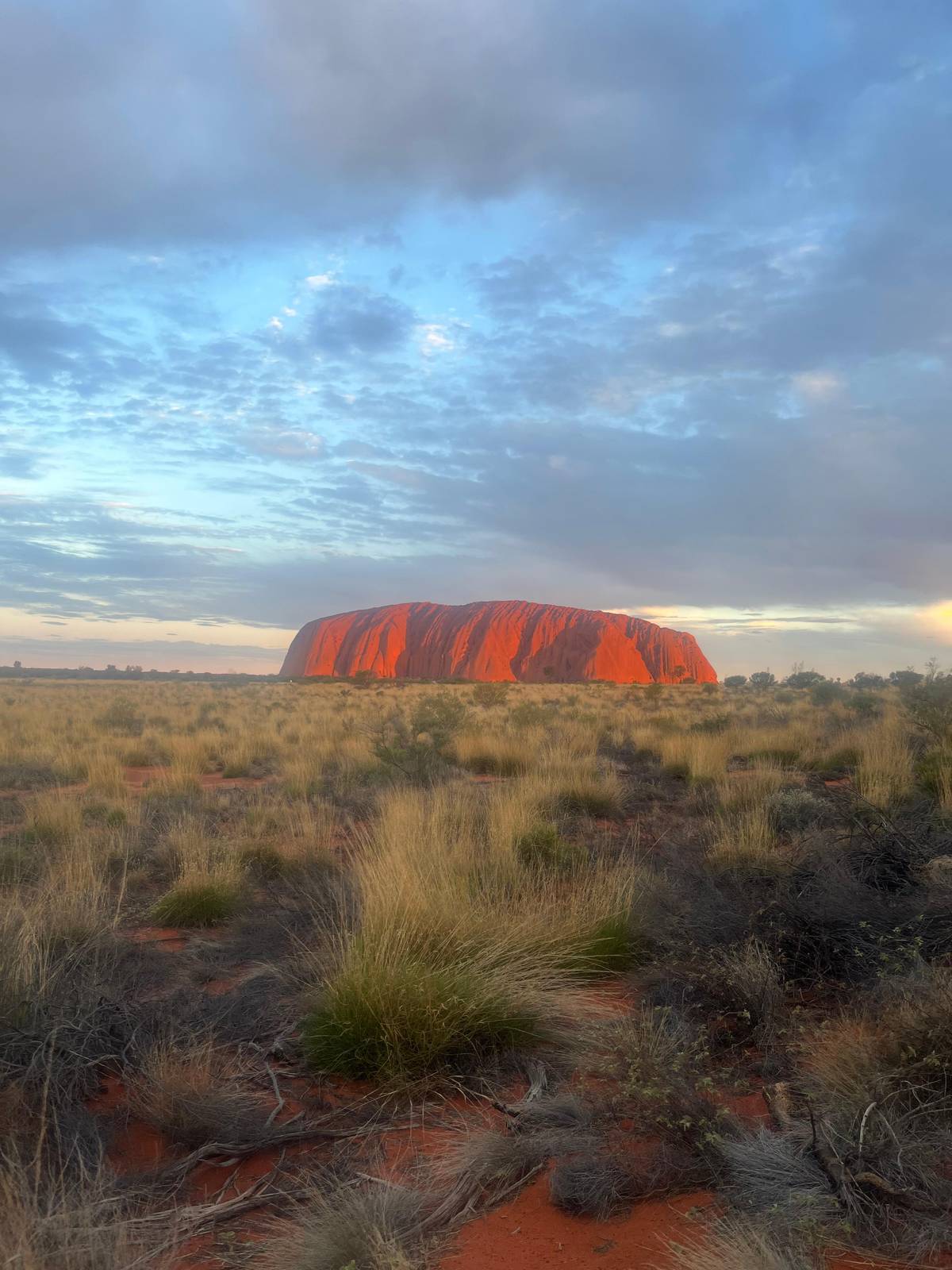
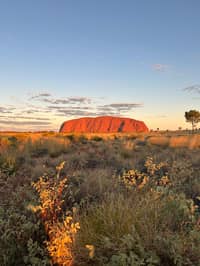
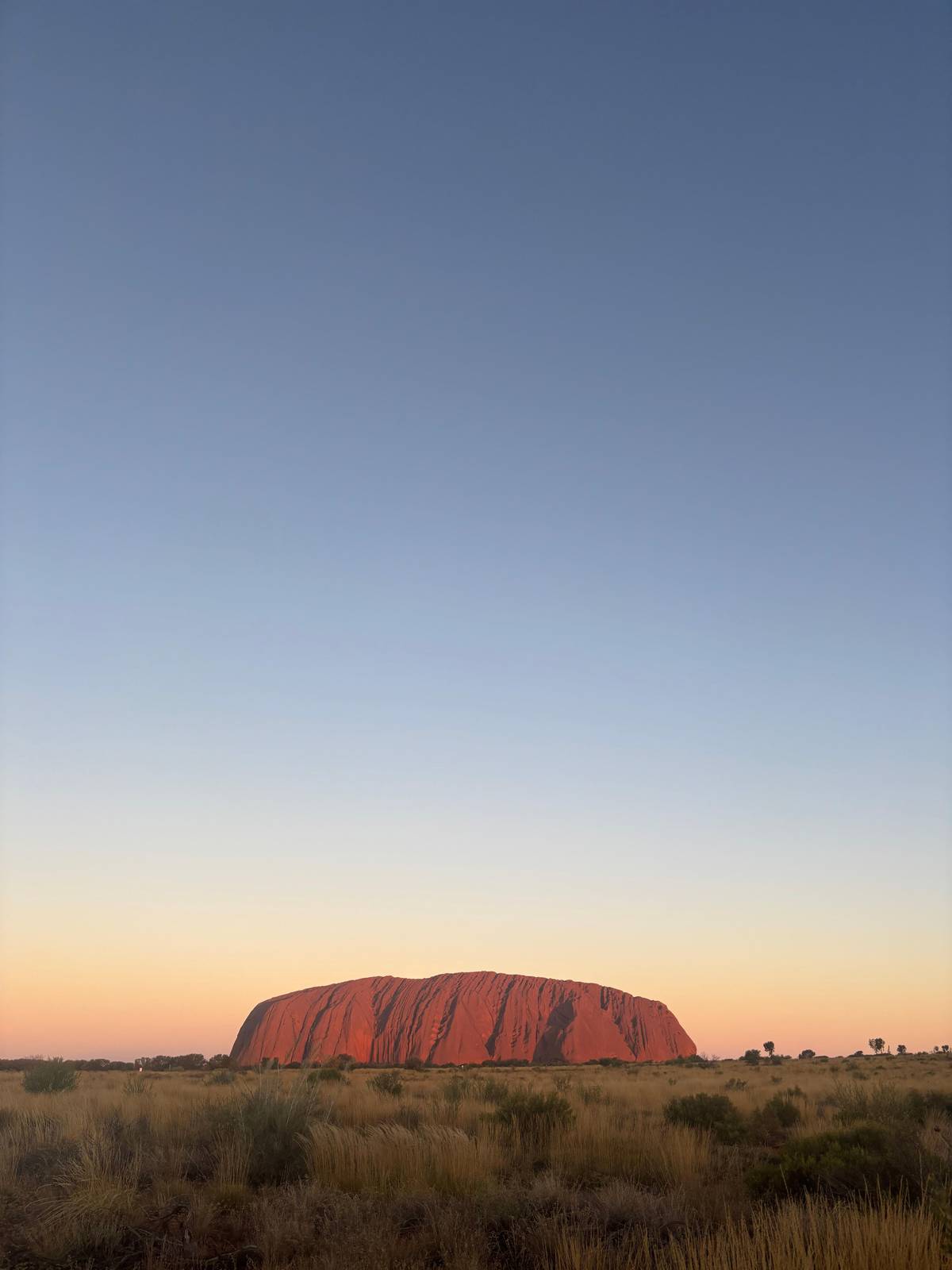
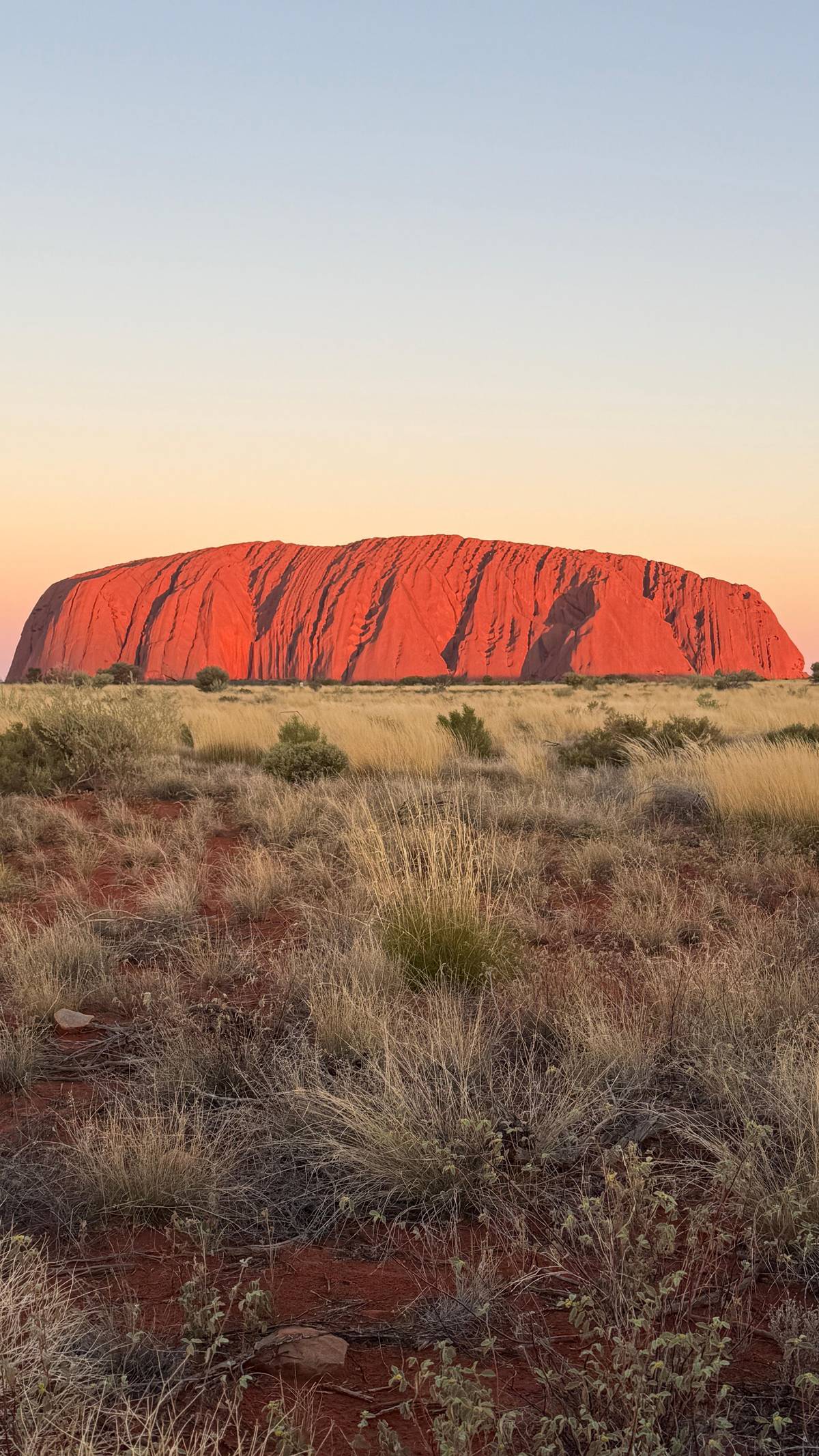
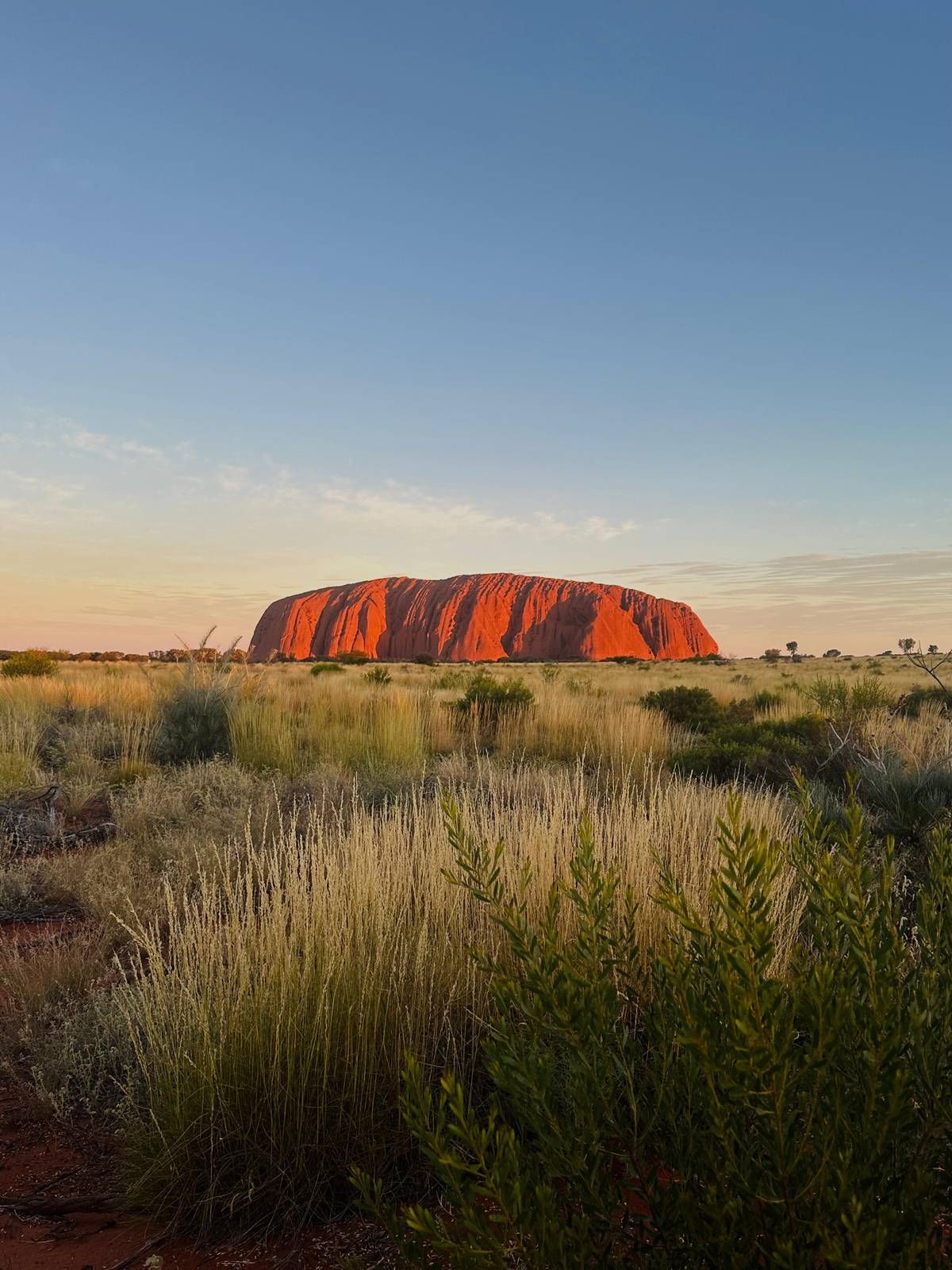
The car sunset viewing area is the place Parks Australia itself calls the spot for the quintessential Uluru photo; as the sun sinks behind you, the rock moves from pinkish hues through fluorescent orange to deep shades of red.8 The bus sunset viewing area lies nearby and gives a panoramic view of the rock, with Kata Tjuta visible in the distance from the top of a sand dune.9
Both are a short drive from the resort: Parks Australia gives 15 to 20 minutes from Yulara for each.103 You can leave the hotel in the late afternoon, watch the whole show and be back for dinner without planning a long day around it.
An evening at the car area
Before you leave
The car area has neither water nor toilets.3
15 to 20 min
From Yulara to the sunset areas.3
Early
The far end of the car park, by the fence.4
1 to 2 hrs before
Shadows start to hide the north-east face.11
Sunset
Pink, then orange, then deep red.8
Closing time
Between 7.30 pm and 9.00 pm, by month.12
This area is for cars only; coaches are sent to the bus sunset area and to Talinguru Nyakunytjaku.1 It is very lively during school holidays, while for the rest of the year the car park is usually big enough for everyone to find their own space.13 Parks Australia suggests bringing your own chairs and nibbles, which turns a quick stop into a proper evening picnic facing the rock.13 A rug, a thermos and something to eat make the wait for the colour a pleasure rather than a stand in the wind.
For a clear, uninterrupted view, drive to the very end of the car park and set up near the fence in the wide sandy area; you will want to arrive early to claim a good place there.4 Parks Australia also names that end of the car park as the place to film a sunset time-lapse.4
Plan for a site with no facilities. The car area has wheelchair access, but no water and no toilets.3 Fill your bottle and use the facilities at the resort or at the Cultural Centre before you drive out, and bring a warm layer: once the sun is gone the desert cools quickly, especially in winter.
Closing time
Month by month
| Month | Daylight (h) | Darkness (h) | High / low | Wet days | Park closes |
|---|---|---|---|---|---|
| Jan | 13.5 | 10.5 | 38 / 23 °C | 2 | 9.00 pm |
| Feb | 13 | 11 | 37 / 22 °C | 2 | 9.00 pm |
| Mar | 12.3 | 11.7 | 35 / 19 °C | 2 | 8.30 pm |
| Apr | 11.5 | 12.5 | 30 / 15 °C | 1 | 8.00 pm |
| May | 10.9 | 13.1 | 24 / 9 °C | 1 | 7.30 pm |
| Jun | 10.6 | 13.4 | 20 / 6 °C | 1 | 7.30 pm |
| Jul | 10.7 | 13.3 | 21 / 5 °C | 1 | 7.30 pm |
| Aug | 11.2 | 12.8 | 24 / 6 °C | 1 | 7.30 pm |
| Sep | 11.9 | 12.1 | 29 / 11 °C | 1 | 7.30 pm |
| Oct | 12.6 | 11.4 | 33 / 15 °C | 2 | 8.00 pm |
| Nov | 13.3 | 10.7 | 35 / 19 °C | 3 | 8.30 pm |
| Dec | 13.7 | 10.3 | 36 / 21 °C | 4 | 9.00 pm |
Yulara Aero beside the airport: the sun's hours above the horizon in mid-month, the usual afternoon high and night-time low, how many days bring rain of 2.5 mm or more, and the park's closing hour; climate averages we calculated from NOAA records, 1991 to 2020.33 Season according to Parks Australia, which sets the closing hours shown.12
Three ways to watch
Own vehicleCars only, no toilets
 On a tour
Coaches after 4.00 pm
 Booked here
The tour booked here
Decision helper
Find your situation
As the sun sinks behind you, the rock transforms from pinkish hues to a fluorescent orange and deep shades of red.
The bus area is open to everyone until 4.00 pm, after which it is reserved for buses and coaches; if you have your own car you are directed to the car area nearby.2 A coach tour that names the coach sunset viewing area brings you here; one listing on our tours page uses Talinguru Nyakunytjaku instead. Most coach tours provide free drinks and snacks here, and Parks Australia suggests checking the details with your operator.15
The parking area gets busy with bus groups at sunset, but a short dune walk of 500 m, about 30 minutes return, lets you leave the crowd behind; note that the dune walk is not suitable for wheelchairs.14 From the end of that walk you look at Uluru and Kata Tjuta together, and can watch Uluru change colour as the sun sets behind the dunes towards Kata Tjuta.9
Unlike the car area, the bus area has toilets, but there is still no water; it is wheelchair accessible.10 If you are on a tour with a fixed departure, ask your guide how long you have before the coach leaves, then decide whether the dune walk fits. The view from its far end is the calmest place to be at this hour, and you can still hear the clink of glasses drifting up from the car park below while you look out over the dunes.
Map
Where the resort, the airport and the two sunset viewing areas sit, the long road in from Alice Springs, and the two rock formations a helicopter shows you.
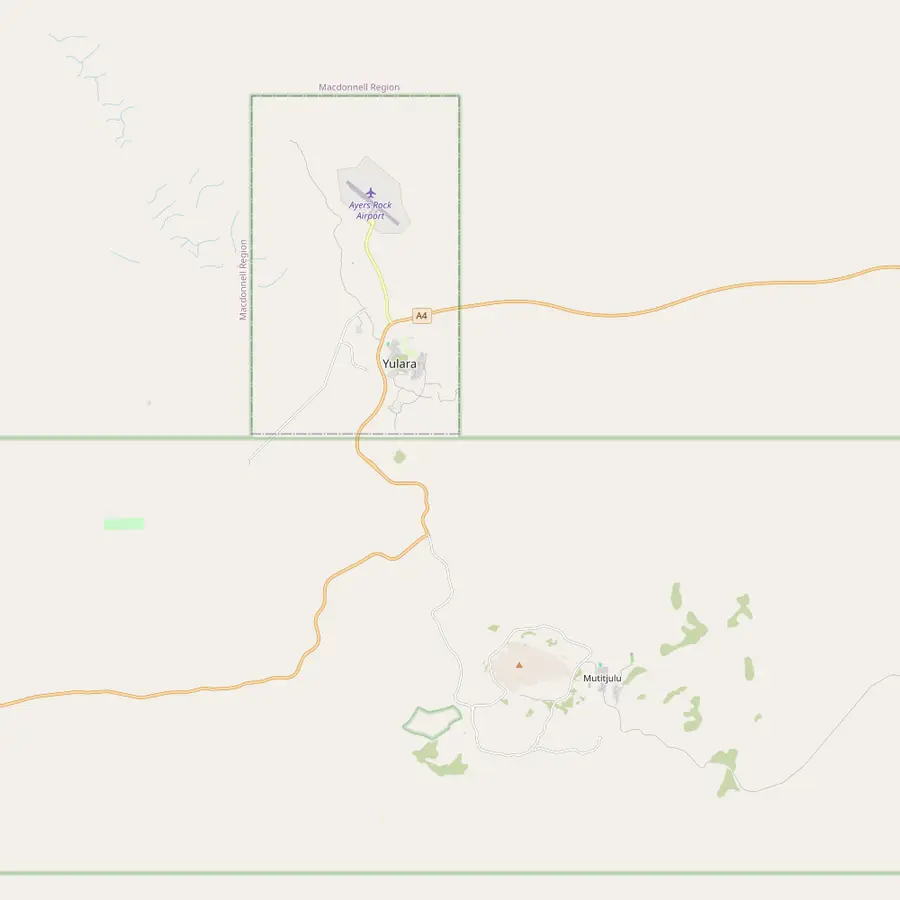 1Ayers Rock Airport2Yulara3Car sunset viewing area4Bus sunset viewing area5Cultural Centre6Mutitjulu Waterhole7Uluru
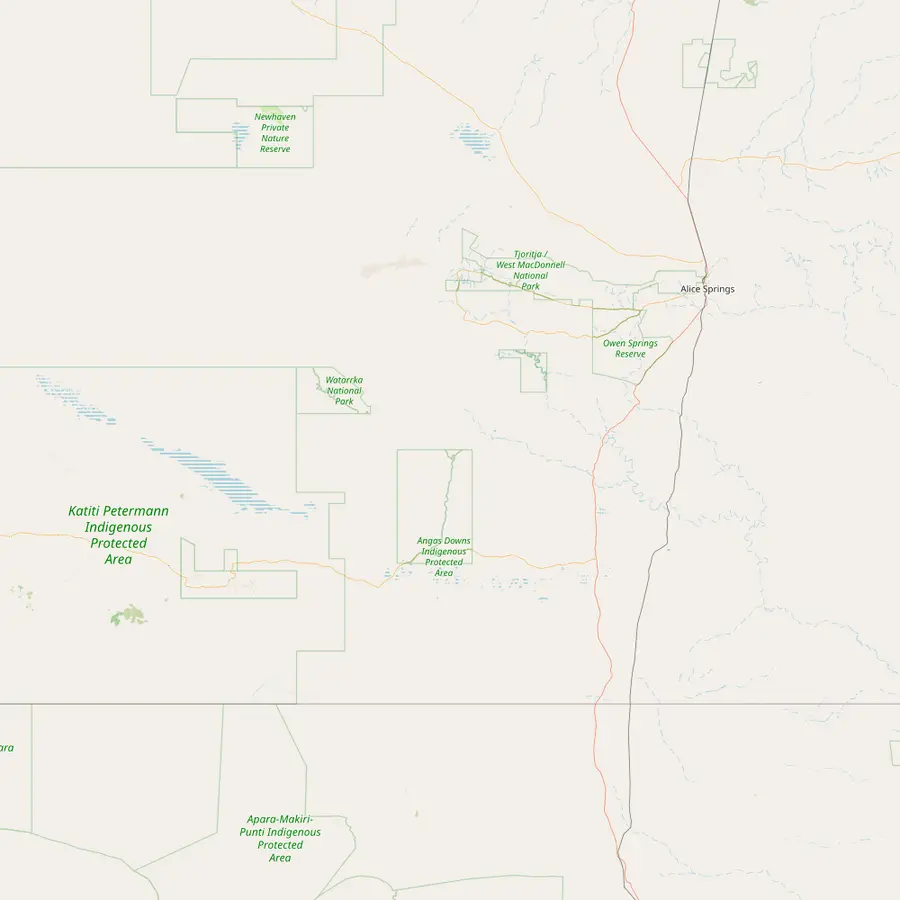 8Alice Springs9Erldunda Roadhouse10Curtin Springs11Mount Conner2Yulara12Kata Tjuta7Uluru
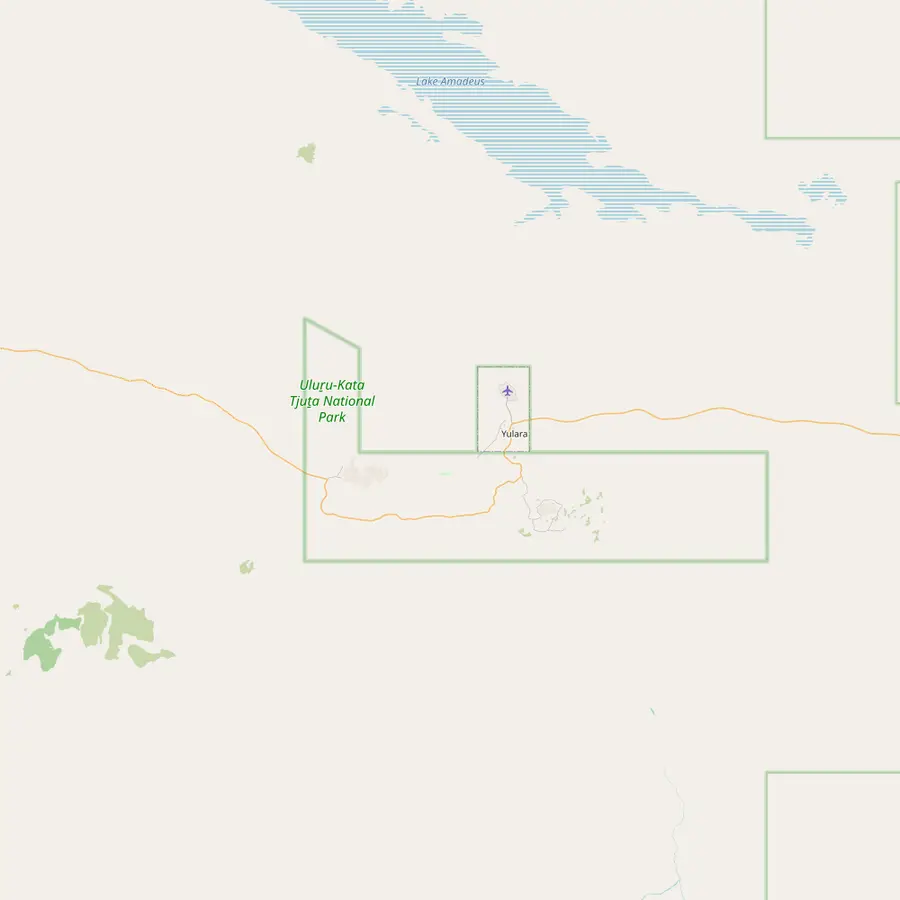 1Ayers Rock Airport2Yulara7Uluru12Kata Tjuta
Code AYQ, with direct flights from Sydney, Melbourne, Brisbane and Cairns.16
In Google Maps ↗Ayers Rock Resort's town, about ten minutes by car from the park entry station.17
In Google Maps ↗Cars only; drive to the far end of the car park for a clear shot.14
In Google Maps ↗Open to everyone until 4.00 pm, then reserved for coaches.2
In Google Maps ↗Doors open at 7.00 am, last visitors out at 5.45 pm, all week.18
In Google Maps ↗A 1 km return walk from the Kuniya carpark.19
In Google Maps ↗348 metres high with a circumference of 9.4 km.20
In Google Maps ↗465 km from Uluru by road, about 5.5 hours of driving.21
In Google Maps ↗The stop where the transfer coach lets you buy food.
In Google Maps ↗The nearest roadhouse, approximately 100 km from Yulara.22
In Google Maps ↗Atila to Anangu, nicknamed Fooluru for fooling first-time drivers.23
In Google Maps ↗Its tallest dome rises 546 metres above the plain.24
In Google Maps ↗Checklist
Video
No video data loads before you press play.
The show builds slowly. Parks Australia's photography advice says the north-east face is best photographed 1 to 2 hours before sunset, when natural shadows hide its sacred sites.11 Arrive early enough to park, walk to your spot and settle in while the colour is still building.
How long you can stay is set by the park's closing time, which changes through the year: 9.00 pm in January, February and December, 7.30 pm from May to September, with the months in between closing at 8.00 pm or 8.30 pm.12 The park closes at night, and every visitor must leave by closing time.5
If you are relying on a coach, its timing follows the sun too. One transfer coach that leaves Ayers Rock Resort just after sunset gives approximate pick-up times of 6:30 to 6:45 PM from 3 May to 21 July and 8:00 to 8:15 PM from 14 December to 11 February. Those times are for that coach only, but they show how much the evening shifts between winter and summer.
The first change is in the rock itself. Under a clear sky the surface glows red at sunset, but on a grey evening, Parks Australia notes, it can look brooding, and after rain it shines, so cloud is no reason to stay at the hotel.25 Watch the shadows in its folds deepen while the face in front of you brightens. Keep your eyes on the rock rather than your screen for a while; the shift happens in minutes, and it is easy to spend all of them looking at a display.
Then the sky joins in. From the car area Parks Australia describes the rock framed by delicate baby blues and bright pinks as the colours shift.8 If your evening falls near a full moon, you are likely to see the moon rising beside Uluru at around sunset, which is one of the few times you will want to look away from the rock.26
After the colour has gone, stay a few minutes longer. The rock turns to a dark silhouette, the first stars show, and the crowd thins as the coaches pull out. If you drove yourself, this quiet stretch before closing time is the best part of the evening, and the drive back to Yulara is short. Drive slowly on the way out: the road is busy with coaches and other cars heading the same way in the dark.
Uluru is sacred to Anangu, and parts of it carry meaning that should only be seen in place and by specific people.27 Parks Australia asks visitors at the sunset areas not to zoom in on particular details from there, and to capture images and footage that show Uluru in its entirety.28 A wide frame is also simply the better sunset picture.
The park is a no-drone zone, so leave the drone at the hotel however tempting the sky looks.29 If you plan to use your photos or video for commercial purposes or public display, including as an influencer or content creator, you need a media permit.30
A last courtesy: the Anangu greeting palya also serves as welcome, thanks and farewell.31 If you meet Anangu artists or rangers on your evening, it is a simple way to show respect. And always ask before photographing a person, as Parks Australia requests.32
Pick your evening
Hotel pick-up, the Kuniya Walk, the Cultural Centre and sunset drinks; cancel free until a day before.
Only until 4.00 pm. After that it is for buses and coaches; cars use the car area nearby.2
At the bus area only. The bus area has toilets; the car area has none, and neither has water.103
15 to 20 minutes by car. That is Parks Australia's driving time from Yulara.3
At 7.30 pm. From May to September the park closes at 7.30 pm.12
No. The national park is a no-drone zone.29
On the dune walk. A 500 m walk, about 30 minutes return, from the bus area.14
In school holidays, yes. The rest of the year it usually has room for everyone.13
Sources
Keep reading